Chris Hemsworth can be considered a “newcomer” to the film industry, given that he has only starred in a few films. However, prior to his first role in Star Trek (2009), Hemsworth was a television actor. After a few bit parts and one recurring role in the show Home and Away (2004-2007), he was able to get his break into the movie industry and has been rising ever since.
With his role in the popular new film The Avengers (2012), he is bound to push through into the A-list of movie actors. In addition, he is working on several upcoming projects which will continue to help his career such as Snow White and the Huntsmen (2012) which is soon to be released.
There’s no disguising the fact that his career is being blessed with great stories that will help develop the way audiences perceive him. Through good screenplays he may become the next big thing in the film world.
Mark Ruffalo, one of the stars of the new film The Avengers (2012), has had a long, eventful career in Hollywood. However, he wasn’t always as widely respected as he is today. As a young man, he worked in theater, but made very little money and was unable to support himself on his talent alone. He took to bartending and did that for 10 years before he finally got his big break. The break came for him by a playwright named Kenneth Lonergan, who is the writer of the thriller, Margaret (2011).
Taking a shine to Ruffalo, Lonergan cast him in one of his plays, which contributed to his career and helped launch a successful start into the film industry. Since then, Ruffalo built his reputation in many widely acclaimed independent films and major motion pictures alike.
The lesson that a person can take from Ruffalo’s career is the fact that determination and hope will get a person through difficult circumstances. Despite the fact that he failed in numerous attempts to enter the entertainment industry, it merely took one well-written and executed play to help launch his career.
Actors and screenwriters will do well to follow the path of Ruffalo’s career, starting with his humble roots in theaters and ending with the major films that he has starred in recently. The most important thing in any person’s career is to follow your heart. By following their heart, a person will be sure that they are on the right track, whether they are accepted or not by mainstream audiences.
Robert Downey Jr. has had a roller coaster of a career ever since his breakthrough fame when he was a young man. Starring in great 80’s teen films such as Weird Science (1985) and Back to School (1986) gave him overnight success and put him in the crowd of powerful teen actors known as the “brat pack.”
However, the fame and success might have been too much for him as he slowly began to descend into a life of hedonism. He got in trouble with the law and even spent some time in jail during this bad period of his life.
Most people thought that he was going to be down forever and would not regain his stardom status, much like many actors of his time failed to do. However, the one thing that Downey had was talent, and it was up to him to decide when he was going to straighten out his life and fulfill his marvelous destiny.
He worked himself up through the ranks, sobered up off of drugs, and eventually landed the role that set his career off again in Iron Man (2008). Almost like déjà vu, he was an all star again. Women loved him and men respected him as he set off to regain his stardom and his regal status among movie goers.
The lesson that Downey’s life exclaims is the importance of seriousness when pursuing a career in the film industry. There are many people who come and go, believing the film industry to be nothing more than a society that caters to their every whim. In fact, it is a business and it requires the same determination, respect and consistency that any other field of work requires.
Conquer laziness and inconsistency, and you will find your path into the film industry.
Adrian Hodges is not notable for being a major film screenwriter. The London based writer has had only three movies actually produced into motion pictures. However, he is not a failed writer at the least. According to IMDB.com (2012), Hodges is well known for his television movie scripts as well as his scripts as a television screenwriter.
The film, “My Week with Marilyn” (2011), starring Michelle Williams, represents one of the few films that he has adapted for the screen. Hodges life long work goes to show how the versatility of a writer can encourage more and more work. Artistic expression may be harbored in some instances, but keeping in practice is one of the best ways to ensure that a person’s writing skills do not falter or diminish.
Scarlett Johansson is definitely a diverse actor as can be seen from the incredibly different roles that she has played over the years. From 1920’s flapper to grungy teenage girl, Johansson has differentiated herself as being more than just another pretty blonde actress. Her career started as a child, when she first showed interest in acting. It was not difficult for her to find work, averaging one role a year even in her humble beginnings. Passion and talent are definitely contributing factors to her gaining such success in her early years- but like many actresses, the importance of a good role cannot be overstated. Johansson’s career can partially be attributed to her ability to choose, or have a manager choose, beneficial roles to create a favorable impression of Johansson on audiences. Starring in the cult classic Ghost World (2001), helped create a well-rounded depiction of who she was, emphasizing the outcast mentality and the snarky humor that has become developed into many characters thereafter. With her role in the hit independent film Lost in Translation (2003), her persona was set in stone. Ever since, she has become a sultry, sarcastic and mature person in the eyes of audiences. Even her roles in children’s cartoons (i.e. The Spongebob Squarepants Movie) give off the same aura that has enamored audiences nationwide. Screenwriters and actors can learn from the history of Scarlett Johnansson by remembering to put everything into their work, no matter whether it is big budget or low budget. The effort that a person puts into their work does make a difference between creating a touching film or a B-movie. Everything makes a difference.
It’s no wonder why the new Avengers (2012) movie is getting so much hype. After several years of films coming out based on individual characters that make up the Avengers team, they are finally bringing them all together for one action packed adventure.
The thought and care that went into the prior films are now made evident in the way that they complement this new film, filling in plot holes and bringing closure to the previous five movies.
Needless to say, screenwriters must have had a very difficult time putting together the scripts for each individual movie. Not only did the scripts have to be entertaining and true to the original content, but it also had to match up with the other five films!
Reading the scripts of these films is a must-do for any person who wants to be a screenwriter. The intricacy and care that was put into each script is something that is rarely seen in Hollywood- not since the days of the Back to the Future saga. Make sure to take time to read these scripts- they are full of wisdom that will help any screenwriter in their profession.
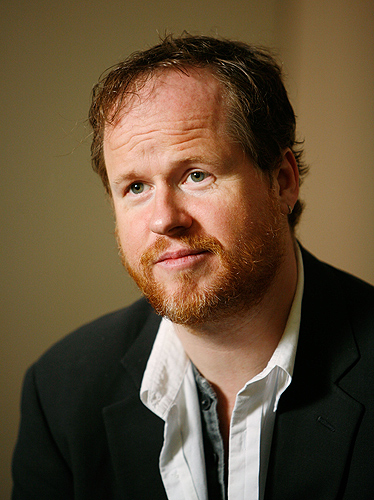
Joss Whedon is a supernatural and sci-fi writer that has finally gotten his big break. With his co-writing credit in the new hit movie, The Avengers (2012), Whedon is bound for stardom and may be getting more blockbuster work in the future.
Whedon’s career has been a Dr. Jekyll and Mr. Hyde transition between film, television and then film again. He is responsible for such famous scripts as the original Buffy the Vampire Slayer (1992) and Toy Story (1994) while also working on several television shows including Buffy the Vampire Slayer: the Series (1996-2003) and Angel (1999-2004).
Again, Whedon is trying to enter into the film industry again with his first comeback film script being The Cabin in the Woods (2011) which was just released recently. With his move back into the film industry, it will be amusing to see what he has learned over the years and has to show the movie going public.
Playwrights and screenwriters can take note of Whedon’s career to see how diversifying work can often prove to help a person find writing success. If one industry pays off then it is only natural to work in that industry. But if for some reason it stops paying, then it will benefit a person’s career to try again in a different venue.
William Goldman is not just a screenwriter, despite the fact that he has had enormous success in the field. Goldman is a writer of all sorts- novels, non-fiction biographies and even how-to books that have sold in record numbers. He has received a Lifetime Achievement Award for his astoundingly touching screenplays and for the ideas that he created that changed cinema.
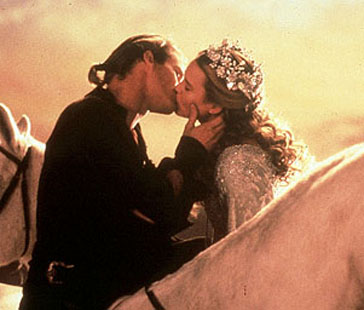
As a novelist, Goldman was responsible for writing at least two of the most widely respected and loved stories of the American people. One is Butch Cassidy and the Sundance Kid (1969) which inspired the love that America still has with Westerns. The other was The Princess Bride (1987), a complete 180 for Goldman to do. From the desert landscape of the Western film, he jumped to the classical enchanted surroundings of a fairy tale.
As far as screenplays go, Goldman has shown his flexibility in adapting to different genres with ease. For the horror movie fans, he was responsible for the Stephen King adaptation of the novel Misery (1990) which is still emulated and joked about to this day. He diversified into the romance district when he wrote such films as Hearts in Atlantis (2001) and Year of the Comet (1992).
Without a doubt, Goldman is a prime example of a writer who did not put himself in a box. Unlike other writers who generally stick to one genre or another, Goldman gave himself the freedom to experience worlds from all different perspectives.
Screenwriters should take note of Goldman’s actions and realize that screenwriting is an art of experience. The human life is full of ups and downs, and this effects what the screenwriter thinks like and writes about. This is not something to be ashamed of, but is an opportunity to grow in different directions as a human being and as a writer.
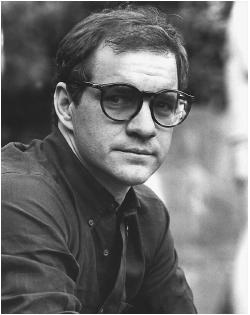
Screenwriters can often be seen as men and women “behind the mask.” Despite the fact that they create worlds that are presented to the world in movie form, they are often forgotten by the public and left to anonymity outside of professional film makers in the field. A good example of an anonymous, yet profound, writer is Paul Schrader. Most people who have seen the film Taxi Driver (1976) associate the film with its director, Martin Scorcese.
In all respects, Taxi Driver does represent many of the qualities that have distinguished Scorcese as a director. However, the film was written by Paul Schrader. The mental workings of this creative genius are apparent when looking at a few other scripts that he has written. Raging Bull (1980) was a profound drama about a boxer who goes through much tumultuous inner struggles before coming out on top in the end. The same thing goes for Taxi Driver.
In addition to these two films, Schrader is also responsible for the adaptation of one of the most controversial films in recent history. The Last Temptation of Christ (1988) is among a few select films that have defied conventional morality in the retelling of Jesus Christ.
It goes without saying that Schrader has had a positive career in the industry, simply by knowing that he had a part in the making of the previously stated three films. However, his career has not been perfect. For every successful film script he wrote, there were a few flops that were considered weak. Some of his scripts became films that remain in anonymity to this day!
The most important lesson for a screenwriter to learn when writing a script is to have faith in their writing ability regardless of how an audience interprets one script. No matter how good a writer is, there will always be a time when he or she simply cannot express an idea in a way that an audience accepts wholeheartedly. Sometimes it takes years or decades for people to even start appreciating the work of one writer. However, he or she must not give up and continue to write; for each writers’ experiences are important and are worthy to be expressed, no matter how the rest of the world depicts it for a moment in time.