Written by:J.R.R. Tolkien (Novel), Fran Walsh (Screenplay), Philippa Boyens (Screenplay), Peter Jackson (Screenplay), Guillermo del Toro (Screenplay)
Script Synopsis:The Dwarves, Bilbo and Gandalf have successfully escaped the Misty Mountains, and Bilbo has gained the One Ring. They all continue their journey to get their gold back from the Dragon, Smaug.
The Hobbit: The Desolation of Smaug Script Resources:
The Hobbit: The Desolation of Smaug Script PDF at Script Slug
The Hobbit: The Desolation of Smaug Script PDF - DESOLATION OF SMAUG [5TH 11-22-2013] at Script Fly ($)
The Hobbit: The Desolation of Smaug Transcript at scripts.com
Note: Multiple links are listed since (a) different versions exist and (b) many scripts posted become unavailable over time. Please notify me if you encounter a stale link.
Other Links:
The Hobbit: The Desolation of Smaug ( tt1170358 ) at IMDb
The Hobbit: The Desolation of Smaug ( 57158 ) at TheMovieDB.org
Written by:John W. Richardson (Screenplay), Christopher Roach (Screenplay), Ryan Engle (Screenplay), John W. Richardson (Story), Christopher Roach (Story)
Script Synopsis:Bill Marks is a burned-out veteran of the Air Marshals service. He views the assignment not as a life-saving duty, but as a desk job in the sky. However, today's flight will be no routine trip. Shortly into the transatlantic journey from New York to London, he receives a series of mysterious text messages ordering him to have the government transfer $150 million into a secret account, or a passenger will die every 20 minutes.
Non-Stop Script Resources:
Non-Stop Script PDF - REVISED DRAFT at Script City ($)
Non-Stop Script PDF - [8/8/2011] at Script Fly ($)
Note: Multiple links are listed since (a) different versions exist and (b) many scripts posted become unavailable over time. Please notify me if you encounter a stale link.
Script Synopsis:In the not so distant future, Theodore, a lonely writer purchases a newly developed operating system designed to meet the user's every needs. To Theodore's surprise, a romantic relationship develops between him and his operating system. This unconventional love story blends science fiction and romance in a sweet tale that explores the nature of love and the ways that technology isolates and connects us all.
Note: Multiple links are listed since (a) different versions exist and (b) many scripts posted become unavailable over time. Please notify me if you encounter a stale link.
Note: Multiple links are listed since (a) different versions exist and (b) many scripts posted become unavailable over time. Please notify me if you encounter a stale link.
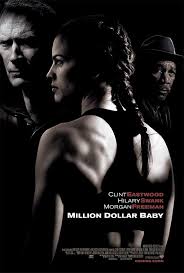
At the heart of every script is a conflict, and it is this conflict that drives the decisions of the characters. How the characters choose to reconcile this conflict is what gives the story its meaning. These conflicts manifest themselves in a variety of ways, sometimes as a single man versus seemingly overwhelming odds, or as a difficult choice a character must make that forces him to sacrifice something he loves. Sometimes this conflict manifests itself a little more directly, in the form of fists striking flesh, and feet shuffling to dodge blows, and when this happens the release of tension can be truly cathartic.
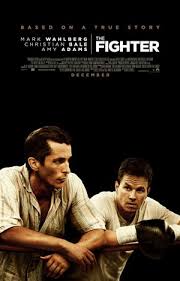
There are few images more compelling than a physical struggle between the sources of conflict in a film, and there are a number of ways this device can be used effectively. In films like David O’ Russell’s The Fighter the physical violence is only a manifestation of the internal conflicts of the film’s protagonist, whereas in Bronson the titular character relishes fighting as a way to garner the fame he desperately craves. In both cases it is a nebulous and abstract conflict giving rise to absolute primal resolution. This is the power of a well designed cinematic fight; it is truly raw.
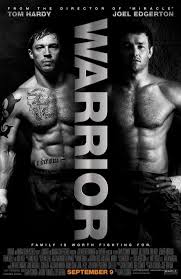
A discussion of great movies about fighting would be incomplete without a mention of Sylvester Stallone’s first film which he wrote, produced and starred in, the immortal Rocky.Rocky is a beautiful example of the poetry of violence magnifying the conflict of a narrative, in this case the ambition of the hero vs. the insurmountable odds against him. In all these cases the violence comes when the hero is left with no recourse and the tension must find release. It isn’t always powerful, but when it is, its as poignant and poetic as any love story, and the push and pull between two foes locked in combat is closer to the posturing of new romance than one might think. These are some of the most impactful examples of the genre, though not as impactful of course as a punch from Tommy Conlon, Tom Hardy’s hard hitting character in Warrior. That guy ripped the door off a tank!
Marlon Brando was born in Omaha, NE in 1924. He was a rebellious child who was, early on, thrown out of military school. In the early 1940s he left for New York, first to study the Stanislavsky Method with Stella Adler, and later working at The Actor’s Studio with Lee Strasberg. By 1943 he had his first Broadway role, in Bobino, then in I Remember Mama the following year.
It was 1947 when he was given the role that made him a household name: the sullen and brutish Stanley Kowalski in Broadway’s production of A Streetcar Named Desire. With the success of this role, the world beat a path to his door. In what would become de rigeur for Brando, he rejected all of Hollywood’s overtures, choosing to continue his work on Broadway for several more years.
It wasn’t until 1951 that he made his first film, reprising his role as Stanley in the Elia Kazan movie of Streetcar. A hugely successful film, he was nominated for, but did not win, the Academy Award for Best Actor (although his three co-stars – Viven Leigh, Karl Malden and Kim Hunter – won their respective awards, and the picture was voted Best Picture.)
His next films – Viva Zapata!, again with Kazan, Julius Caesar and The Wild Ones, were all commercially successful and well received critically.
In 1954 he gave what was, in the view of many, his finest performance, as washed-up boxer Terry Malloy in Elia Kazan’s On the Waterfront. A commercial and critical success, Brando won his first Academy Award. He was thirty years old and had, perhaps, reached the pinnacle of his career.
A number of failed projects followed, interspersed with a few commercial successes, like Guys and Dolls, where he co-starred with Frank Sinatra, and Sayonara, for which he received yet another Oscar nomination. In 1958 he co-starred with Montgomery Clift in The Young Lions, another well-reviewed commercial hit.
As he piled up the failures – The Fugitive Kind, Mutiny on the Bounty, Napolean, One-Eyed Jacks, The Ugly American, The Chase, A Countess from Hong Kong, Reflections in a Golden Eye, Candy, Quiemada!, The Nightcomers – he became increasingly unpopular with studio heads. He had become outspoken about his profession – declaring acting a “neurotic, unimportant job” – and very publicly played the role of arrogant and disrespectful anti-star, much to the dismay of the studios and directors who paid his salaries.
It was over the objections of Paramount Studios management that Francis Ford Coppola chose Brando for his role as Don Corleone in the 1972 classic, The Godfather. His performance in the film was tremendously well received by both the critics and the public, and he won his second Academy Award. Unfortunately, he squandered much of that adulation when he chose to send a fake Native American spokeswoman – really a Hispanic actress dressed as a Native American – to receive the award, giving her the opportunity to make a speech about the history of the US government’s “crimes” against native peoples.
After a few movies that he made – by his own admission – just for the money (including the well-reviewed Last Tango in Paris, Missouri Breaks with Jack Nicholson and Superman, (for which he earned $3.7 million for a tiny role) he was cast as Col.Kurtz in Coppola’s Apocalypse Now.
After just one more appearance, in 1980’s The Formula (in which he appeared in only three scenes) he disappeared from Hollywood and retired to his private island in the Pacific, emerging only once to play a supporting role in the anti-apartheid drama A Dry White Season, for which he won another Academy Award nomination.
In 1992, after several family tragedies drained his finances, he went back to work, appearing in a series of forgettable films, including Christopher Columbus: The Discovery, Don Juan DeMarco with Johnny Depp, The Island of Dr.Moreau,and The Brave, which was Depp’s directorial debut.
In 1998 he co-starred with Martin Sheen, Charlie Sheen, Donald Sutherland and Mira Sorvino in Free Money, after which he again disappeared to his island. In 2001 he re-emerged to make his final film appearance, in Frank Oz’s The Score, with Robert Deniro, Angela Bassett and Edward Norton.
In 2004 he passed away, the result of pulmonary fibrosis. He was 80 years old.
Richard Linklater’s films are a sort of challenge to the film industry. His willingness to depart from traditional techniques and narratives and to do so in such a radically independent way have established him as a perfect of example of what independent filmmaking could be. Linklater is a totally self-taught screenwriter, director and producer and has won numerous awards for his films including several Austin Film Awards. He has been nominated for the Academy Award for best adapted screenplay twice, as well as awards at Cannes film festival and Independent Spirit.
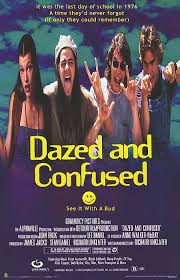
His career began with a $3,000 super 8 feature called It’s Impossible to Learn to Plow by Reading Books but his first real fame came in 1993 with Dazed and Confused which also helped launch the career of a young Matthew McConaughey. The film followed the exploits of young people dealing with disaffection and apathy which became a recurring, prominent theme in his work.
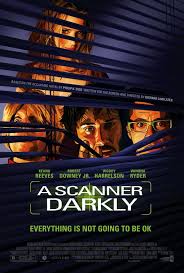
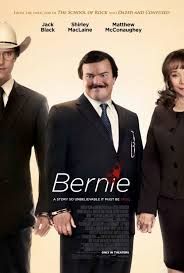
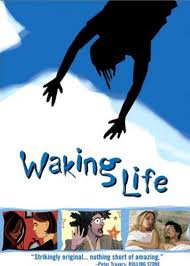
With Waking Life Linklater brought the idea of lucid dreaming into prominence, and developed a rotoscoped animation technique he would later perfect in, A Scanner Darkly. A few years later, he experienced some mainstream success with School of Rock. In 2011 he worked with Jack Black a second time in the para-documentary Bernie which featured stellar performances by a cast of non-actors who had actually experienced the events of the film. In 2013 he completed his “Before” trilogy with Before Midnight with Ethan Hawke reprising his role from Before Sunset and Before Sunrise.
Linklater’s strength as a writer comes from his ability to capture the essence of people like him: artistic, alternative and hip kids with something to prove. His legacy as a filmmaker serves as a powerful testament to the potential of independent film, and the proper ways to go about making them. Here are some of his best scripts.
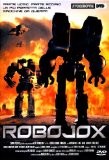
Almost a genre in its own right, films about giant robots that attack the earth or fight for humanity’s survival are a staple of the summer blockbuster. Until recently, traditional or stop motion animation were some of the only ways to depict action on this scale so films like the cult classic Robot Jox were largely scorned for being more corny than awe inspiring. In Japan however, the “mecha” animation genre became extremely popular and spawned dozens of titles including favorites like Robotech, Voltron, and the Gundam franchise which explored the relationship between the honor of traditional combat and the devastating power of modern weaponry. Huge mechanical monsters were also featured heavily in another Japanese franchise, the Godzilla films, which included metal behemoths like Mecha Godzilla and Jet Jaguar . Meanwhile in the US, the Transformers animated series and the often belittled Go-bots series developed passionate following in the form of youngsters who were equally passionate about the series’ corresponding action figures, provoking accusations that the cartoons were essentially 30 minute commercials for toys.
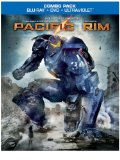
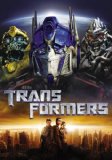
As computer graphics developed, it became possible to depict widespread destruction more realistically and with greater detail than ever before. In 2007 Michael Bay brought the Autobots and Decepticons to the big screen for the first time since Transformers: The Movie, and its astounding commercial success made it clear that more heavy metal slugfests were sure to come. While the quality of Roberto Orci and Ehren Kruger’s writing in the Transformers series is sometimes called into question critically, there is no questioning these films’ technological achievements, or the delight they bring to their fans. In 2013 Pacific Rim, writers Travis Beacham and Guillermo Del Toro combined many of the tropes of the aforementioned Japanese titles and brought them to eager fans all over the world. As new generations of filmmakers are inspired by these images and concepts, there’s simply no telling what sort of mechanized wonder may be yet to come.
Until then, here are some of the best examples of scripts that involve these mechanical titans.
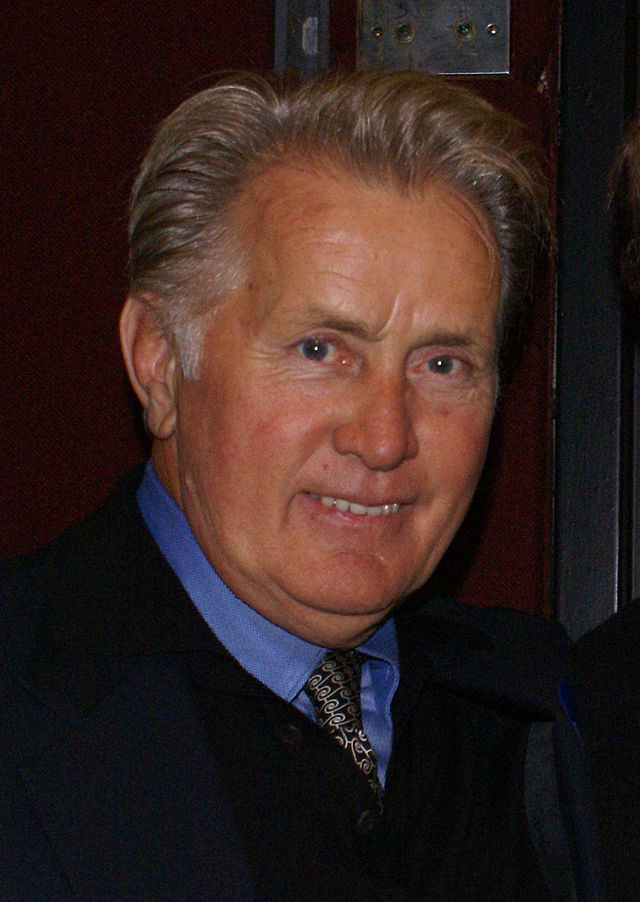
One of the finest actors in recent decades, on both the big and small screens, Martin Sheen has multiple Emmy (10 nominations, 1 win) and Golden Globe (8 nominations) nominations and awards.
Born Ramon Antonio Gerardo Estevez in Dayton, Ohio, he suffered an injury at birth that left one of his arms inches shorter than the other, and with limited range of motion. Growing up one of ten children in Dayton, Estevez wanted to be an actor, despite opposition from his father. In his early 20s he borrowed money from a Catholic priest and moved to New York City to pursue a career, after deliberately failing the entrance exam for the University of Dayton.
Over his career to date Sheen has narrated or appeared in 115 feature films, narrated or appeared in 41 documentaries and starred or guest starred in 33 television shows. That has not stopped him, however, from his political and social activism. In fact, Sheen is quoted as saying that “While acting is what I do for a living, activism is what I do to stay alive.”
His political activities have caused him to be arrested 66 times (as of 2010) for protesting and acts of civil disobedience, including trespassing at a Nevada nuclear site.
Sheen has shown himself capable of playing presidents, priests and privates, generals, gangsters and grandfathers. Here’s looking forward to many more scripts to come.
This is the master list of Sheen’s commercial movies.
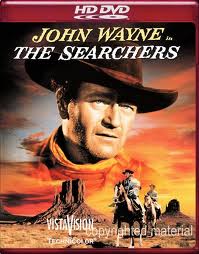
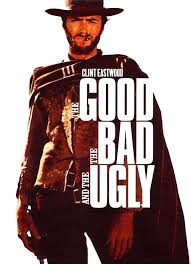
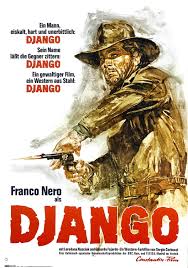
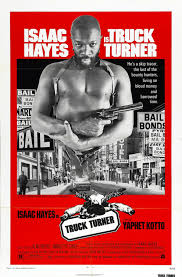
Quentin Tarantino is known as much for his ability to recreate tropes and concepts from his archival understanding of pop culture, as he is for his directing. A Tarantino movie to the keen observer plays like a potpourri of blaxploitation dialogue, kung fu action, and the stares of grizzly cowboys in westerns. Each of his films features almost too many references and homages to count like Kurt Russel’s vest from Big Trouble in Little China popping up in Death Proof, or the black and white suits his characters always wear made famous by John Woo. Here are five great examples of films that inspired Tarantino.
See if you can figure out how Q.T. remixed elements of these films into his own.